Why Lighting Is Essential in a Luxury Kitchen
When people think about a luxury kitchen, their attention is usually drawn to premium materials, bespoke cabinetry or high-end appliances. While these features undoubtedly define the quality of the space, another element has an equally significant influence on how the kitchen looks and feels every day: lighting. Thoughtfully designed lighting transforms the atmosphere of a room, enhances functionality and highlights the craftsmanship invested in every detail.
Lighting should never be considered as something to add once the renovation is complete. In a well-planned project, it forms part of the architectural design from the very beginning. Every light source has a specific purpose, contributing to a balanced environment where practicality and aesthetics work together seamlessly.
The first objective of kitchen lighting is to provide sufficient illumination for everyday tasks. Preparing food, cooking and cleaning all require excellent visibility. Even the most beautifully designed kitchen can become frustrating to use if shadows fall across worktops or if key preparation areas are poorly lit.
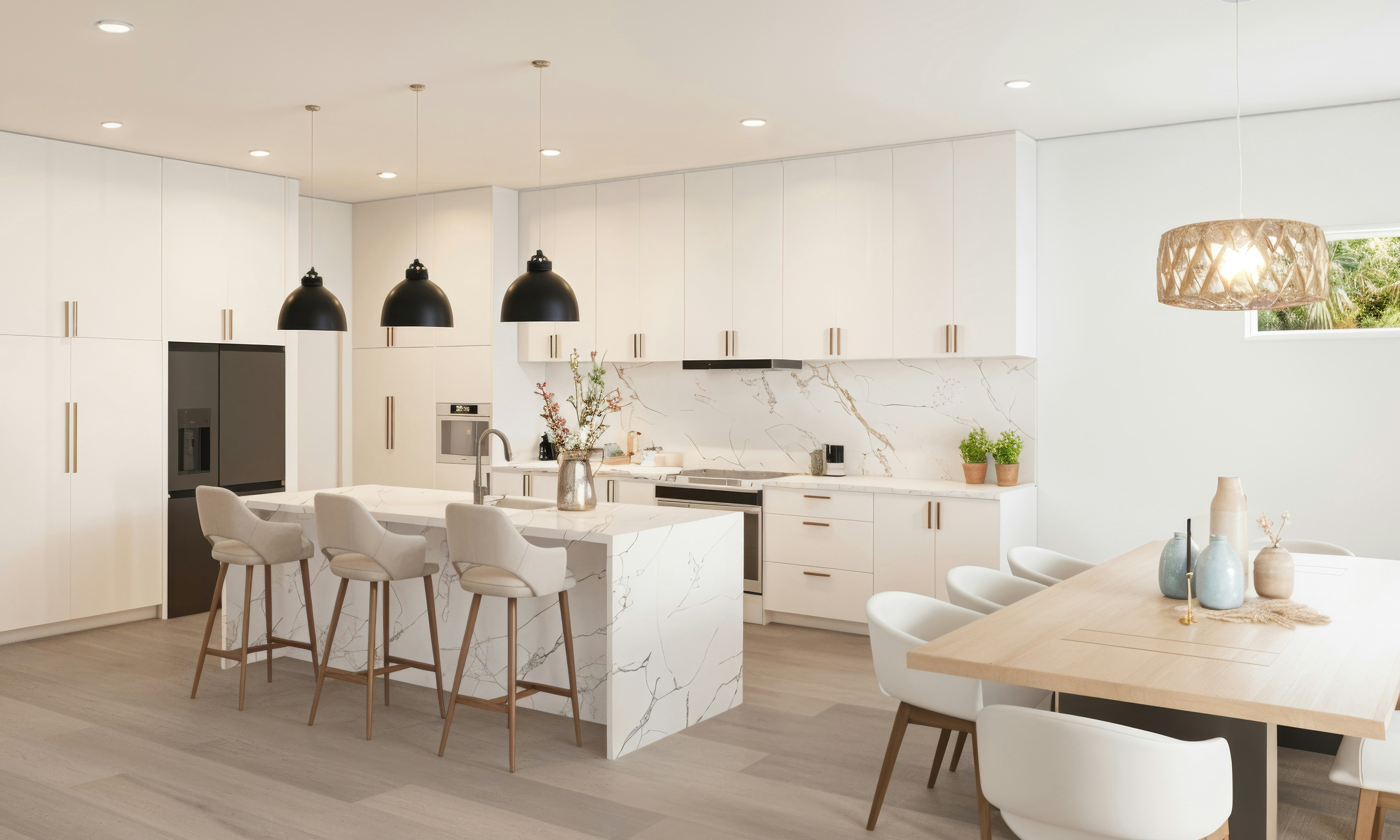
Recessed ceiling spotlights remain one of the most effective ways to provide consistent general lighting throughout the room. Their discreet appearance complements contemporary interiors while allowing designers to position light precisely where it is needed without overwhelming the overall design.
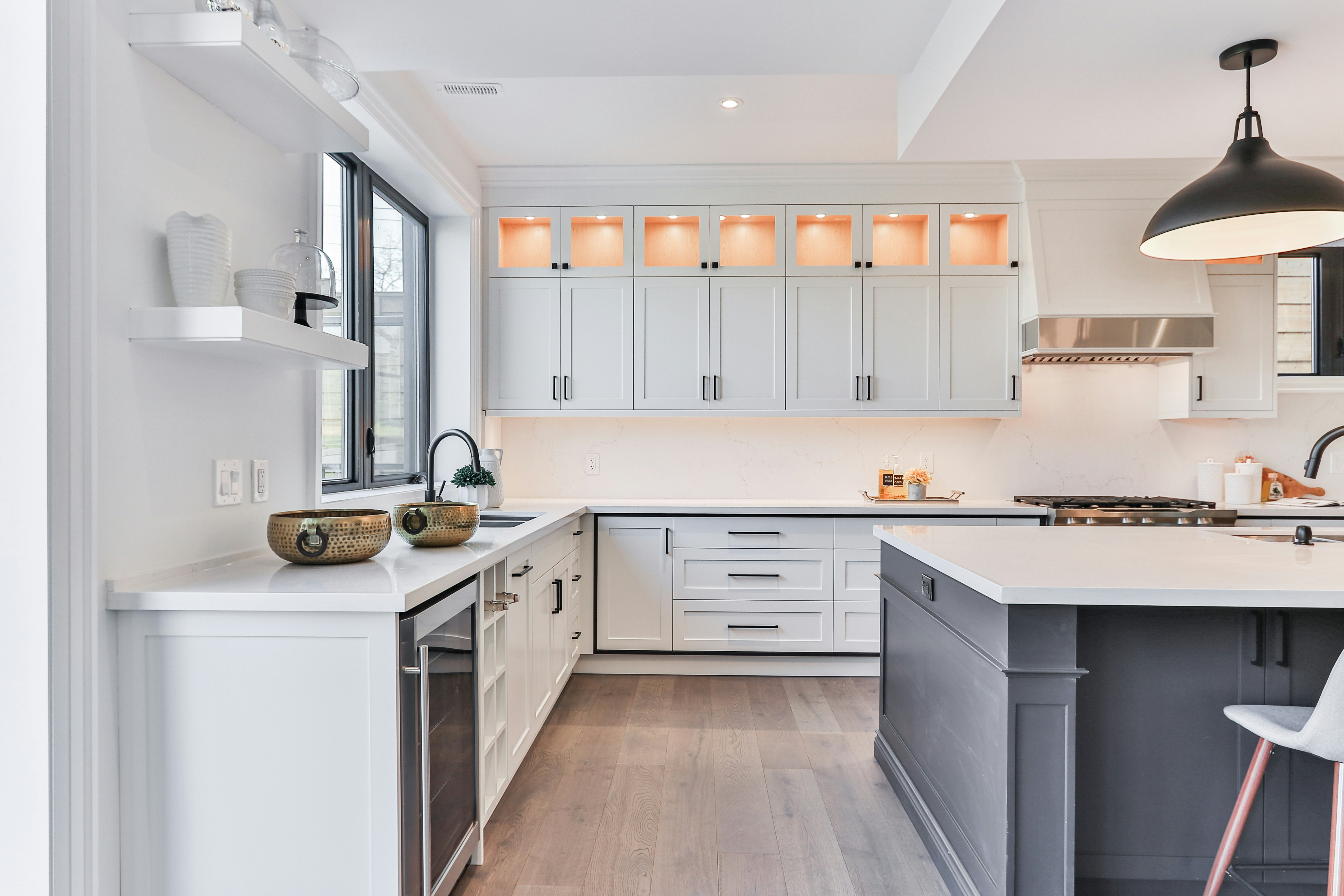
Under-cabinet LED lighting has become a defining feature of modern luxury kitchens. Installed beneath wall units, it illuminates the work surface directly while emphasising the clean lines of the cabinetry. Beyond its practical benefits, this subtle lighting also creates a sophisticated atmosphere during the evening when the main ceiling lights are dimmed.
The kitchen island often deserves its own dedicated lighting design. As the central gathering point in many contemporary homes, it serves multiple purposes throughout the day, from food preparation and informal dining to entertaining guests. Carefully selected pendant lights help define the island visually while introducing an additional layer of architectural interest.
Colour temperature is another important consideration. Lighting that is too cool can make natural materials appear harsh and clinical, whereas excessively warm lighting may alter the true colours of stone, timber and cabinetry. In most luxury kitchens, a warm white or neutral white light creates the ideal balance between comfort and accurate colour rendering.
Different materials respond to light in unique ways. The subtle veining of natural marble, the rich texture of timber and the refined surface of porcelain all reveal their character differently depending on the lighting conditions. This is why lighting design should always be developed alongside the selection of finishes rather than afterwards.
Dimmable lighting systems provide valuable flexibility. Bright illumination may be desirable while preparing meals, whereas softer lighting creates a relaxed atmosphere for dinner or entertaining. Having the ability to adjust lighting throughout the day allows the kitchen to adapt naturally to changing activities without altering the room itself.
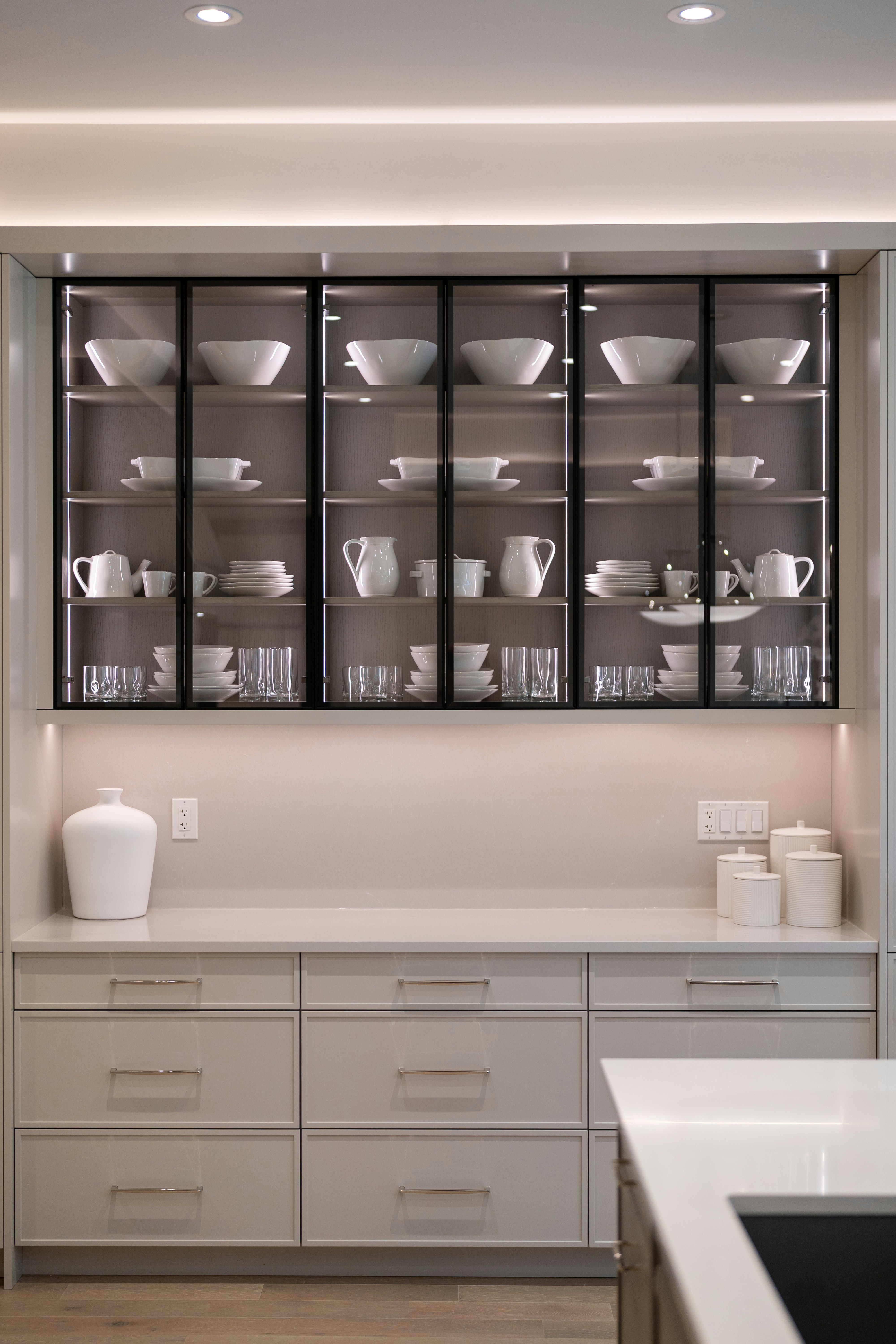
Interior lighting within display cabinets, glass-fronted cupboards or open shelving adds another layer of refinement. It improves visibility while subtly showcasing decorative objects, glassware or carefully selected tableware. These details contribute to the sense of craftsmanship and attention to detail expected in a premium kitchen.
Many luxury homes now incorporate lighting into wider smart home systems. Homeowners can create customised lighting scenes for cooking, dining, entertaining or evening relaxation, all controlled through wall panels, smartphones or voice assistants. While not essential for every project, this technology provides an additional level of comfort and convenience.
Energy efficiency also plays an increasingly important role in modern kitchen design. Contemporary LED technology consumes significantly less electricity than traditional lighting while offering an exceptionally long lifespan and producing very little heat. These advantages make LED lighting the preferred solution for both permanent residences and second homes.
Perhaps the most important principle is that successful lighting should feel effortless. Rather than drawing attention to individual fittings, it should quietly enhance the architecture, emphasise quality materials and support everyday living. The most impressive lighting schemes are often those that remain almost unnoticed while making the entire room feel more welcoming and functional.
At OUDINI BRC, lighting is considered from the earliest stages of every kitchen renovation. By coordinating electrical planning, architectural design and interior finishes from the outset, we create kitchens where light enhances both the beauty of the space and the experience of living in it.
Conclusion
Lighting is far more than a practical necessity. It defines the atmosphere of a luxury kitchen, enhances premium materials and improves the comfort of everyday life.
When lighting is integrated into the design process from the very beginning, it becomes one of the key elements that transforms a beautiful kitchen into an exceptional one.
Related Articles
The Essential Elements of a Luxury Kitchen
How to Choose the Perfect Worktop for a Luxury Kitchen
Why Bespoke Storage Makes All the Difference in a Luxury Kitchen
How to Choose the Right Appliances for a Luxury Kitchen